A whole bunch of Blade Runner 2049 VFX breakdowns in one place
May 21, 2018Blade Runner 2049 wins 2018 BAFTA as well as 90th Oscars award for Best Visual Effects
Blade Runner 2049 Director: Denis Villeneuve Head of the Visual Effects is John Nelson and the Production VFX Producer is Karen Murphy.
VFX Done By:
DNEG -VFX Supervisor: Paul Lambert
Framestore -VFX Supervisor: Richard Hoover
MPC -VFX Supervisor: Richard Clegg
Atomic Fiction -VFX Supervisor: Ryan Tudhope
BUF
Rodeo FX
UPP -VFX Supervisor: Viktor Muller
Territory Studio
Blade Runner 2049 VFX Breakdown By Framestore
Framestore -VFX Supervisor: Richard Hoover
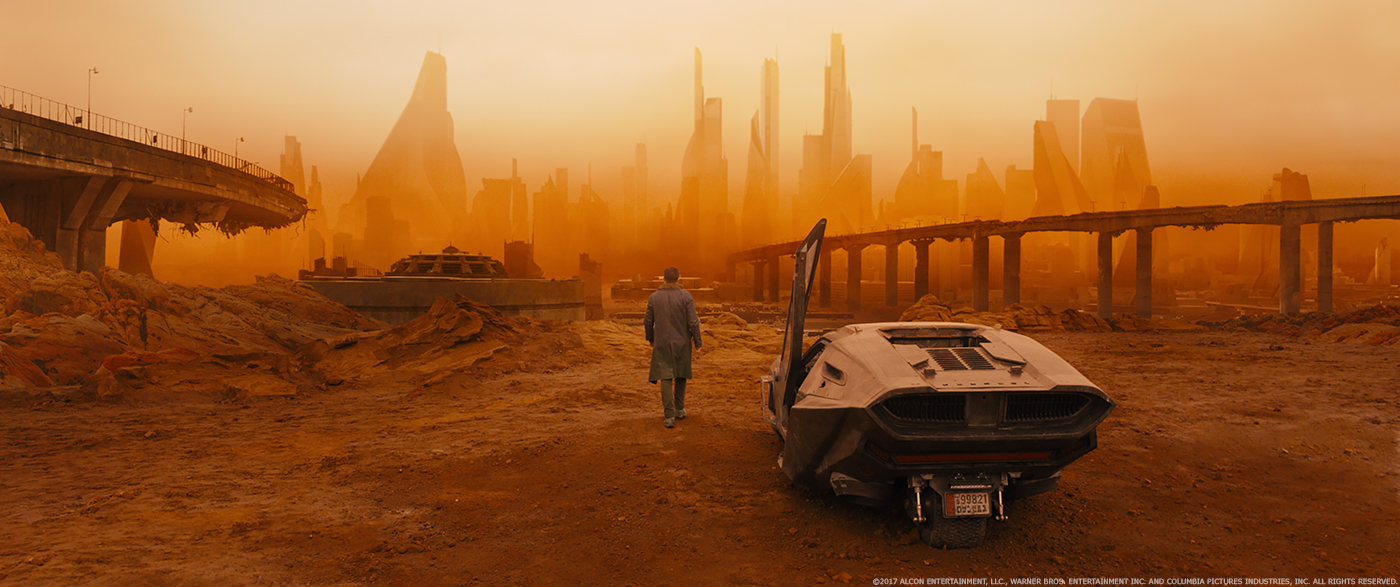
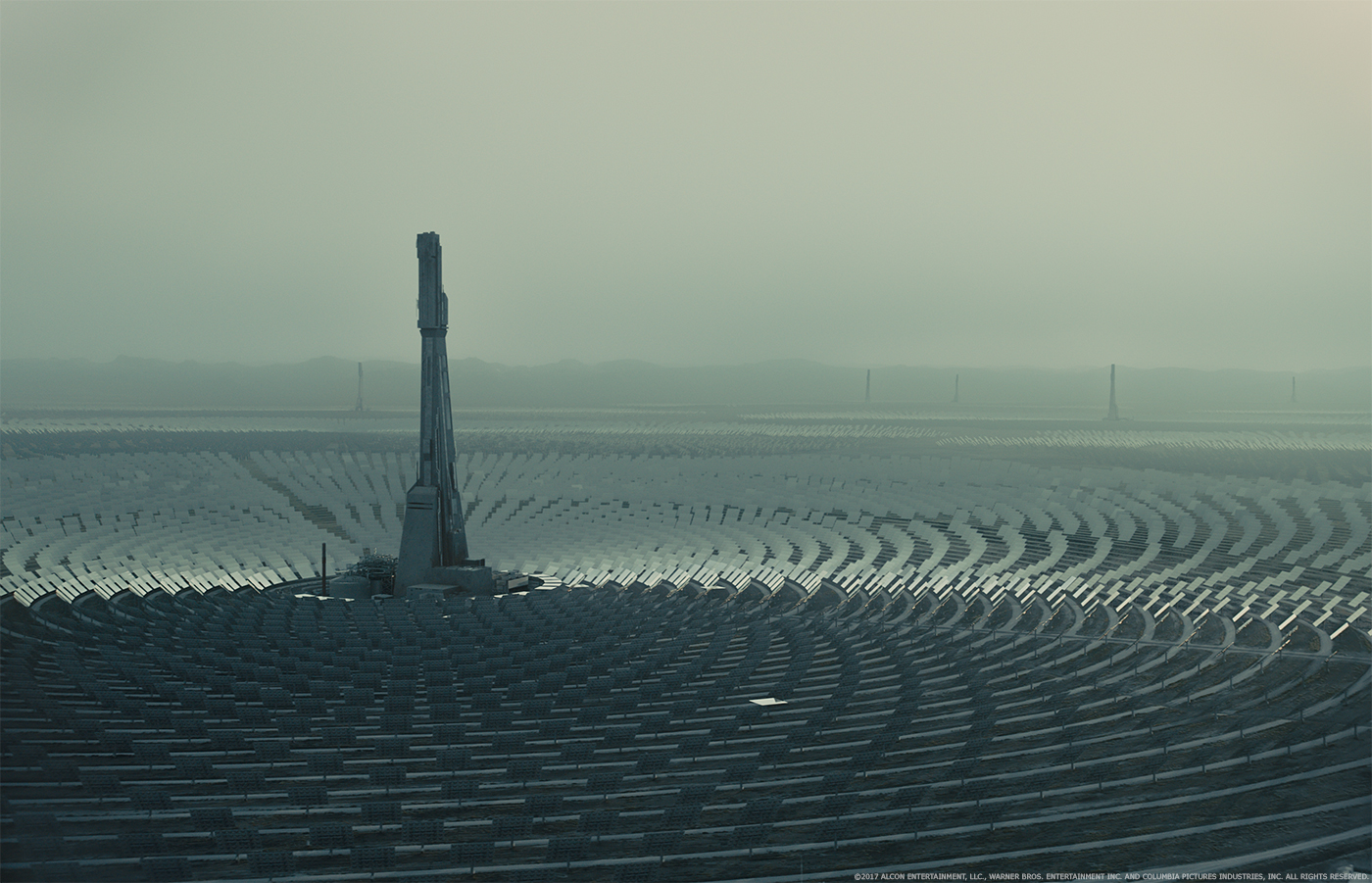
Framestore Worked on awarded the opening sequence from the eye to K walking up to Sappers door. The Las Vegas sequences, drone POV, K’s walk through the statuary and the shots looking out of the hotel to the Vegas background. Lastly, the Trash Mesa portion of the film from leaving LA through the shipyard, K crashing his spinner up to his finding the Orphanage.
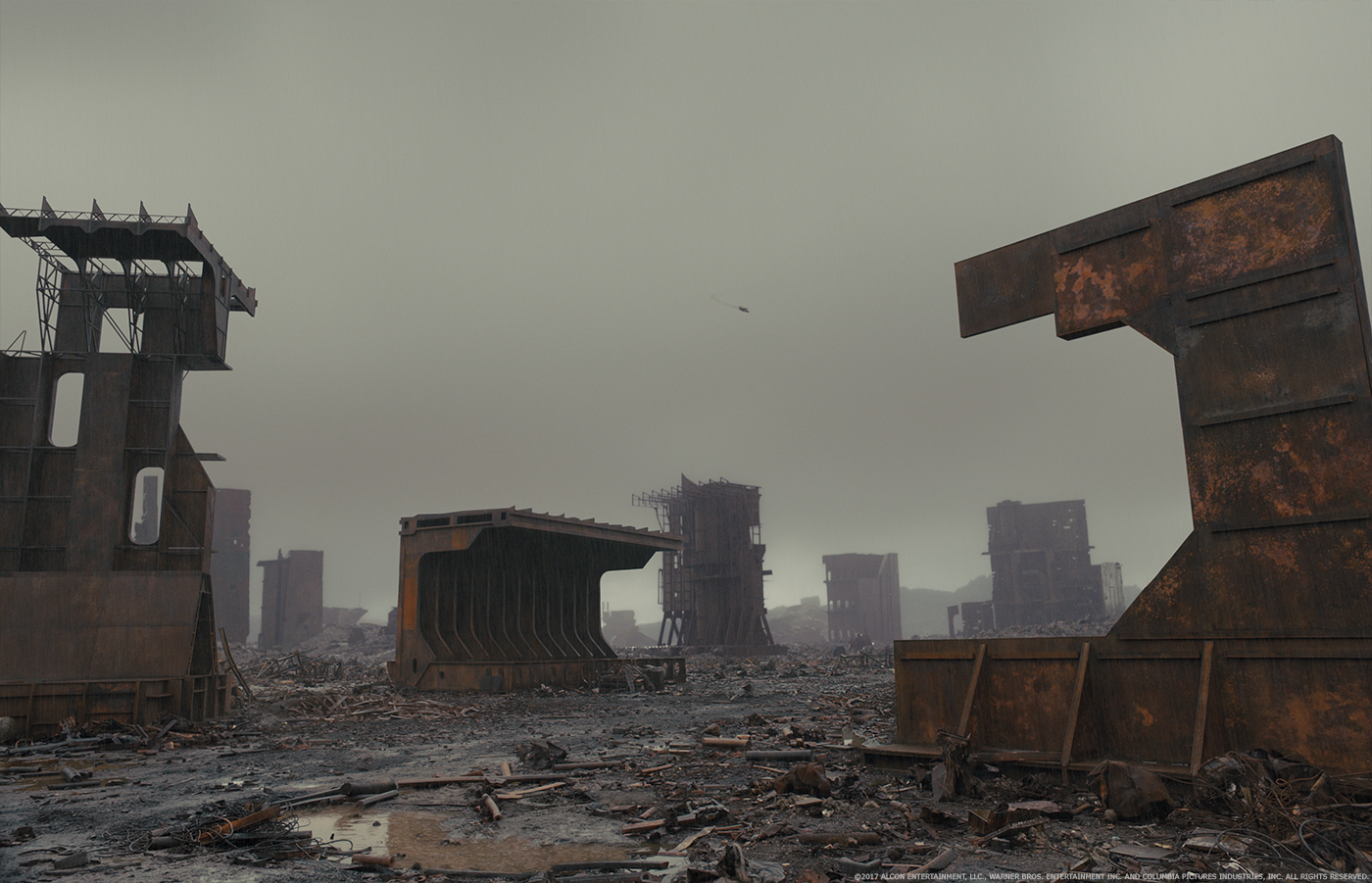
Framestore artists crafted concept artwork used in pre-production, and delivered nearly 300 shots of VFX work in post. Tasked with the creation of large-scale CG environment builds and some challenging animation work, Framestore teamed with VFX Supervisor John Nelson to pay homage to the original picture, whilst creating an atmospheric film of the future
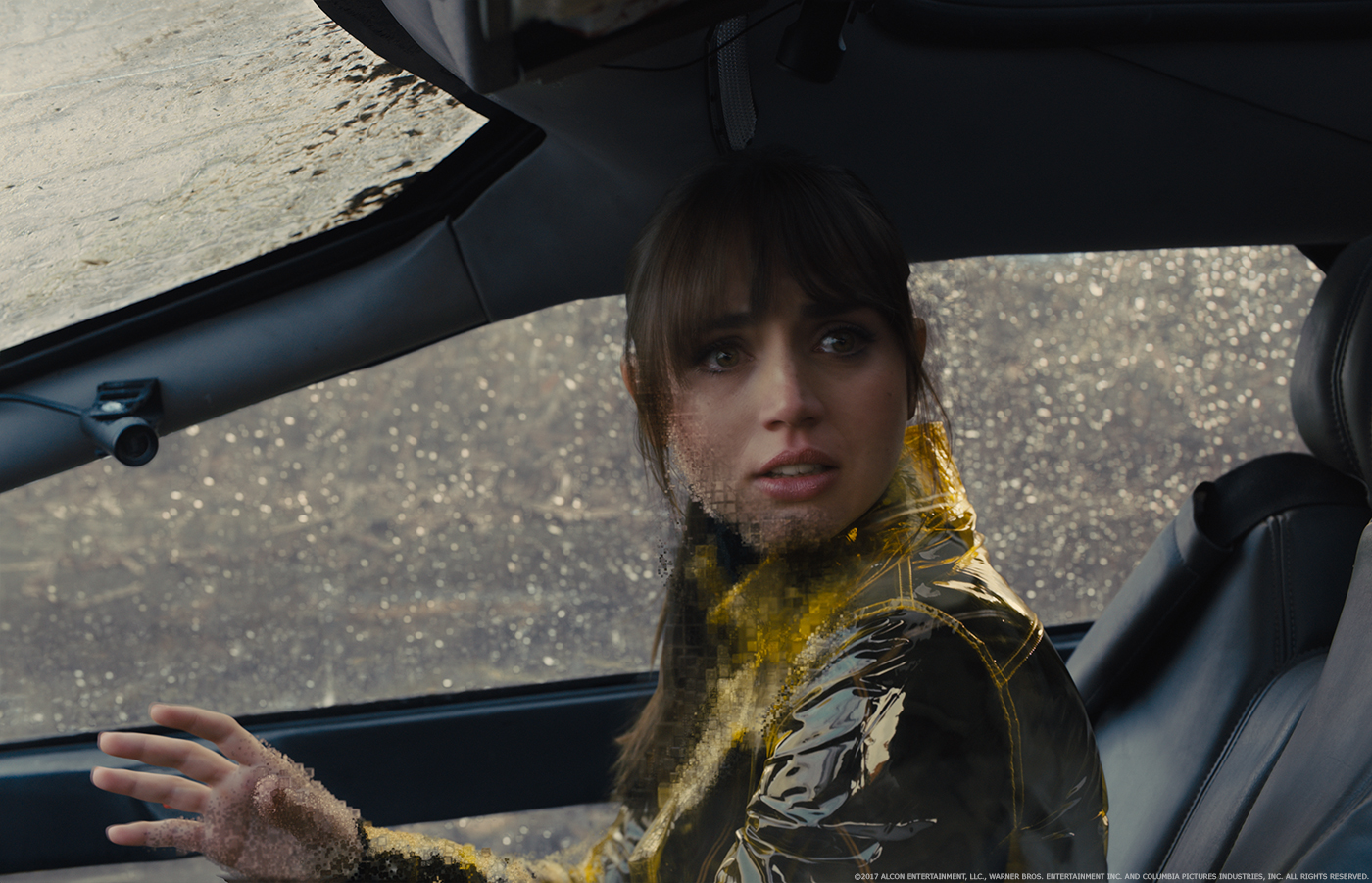
Blade Runner 2049 VFX breakdown By MPC
MPC
Leading the race to digital humans with a photoreal character for Blade Runner 2049
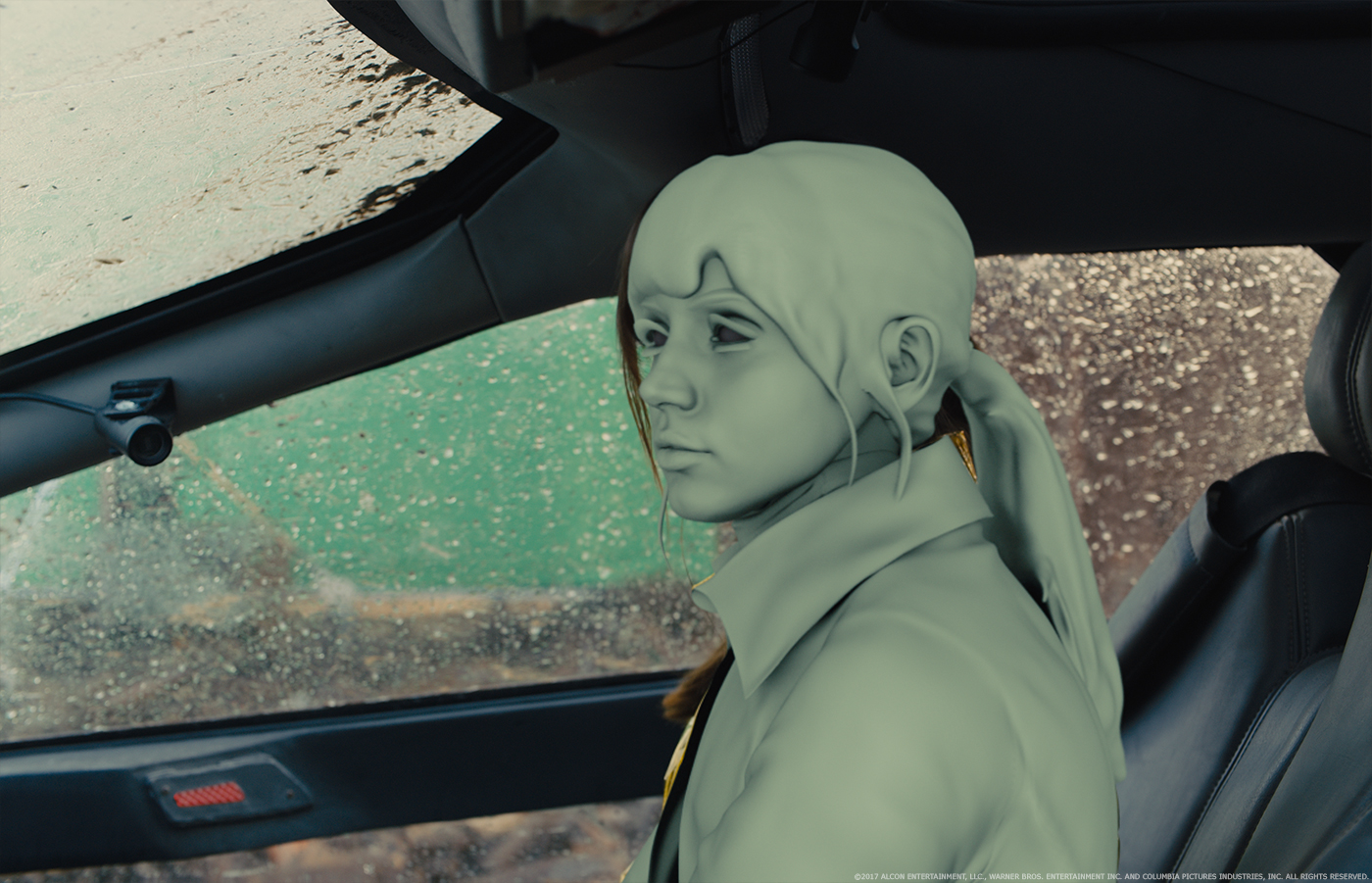
Replicating Rachael for Blade Runner 2049 was both a huge honour for MPC as well as an exciting technical and creative challenge. The team lead by VFX Supervisor Richard Clegg worked closely with Director Denis Villeneuve and Production VFX Supervisor John Nelson.
One of the major challenges was how to approach the CG sculpt of Rachael’s head. Blade Runner was filmed more than 30 years ago and so Sean Young, the actress who played Rachael in the original movie, was younger at the time with different features.
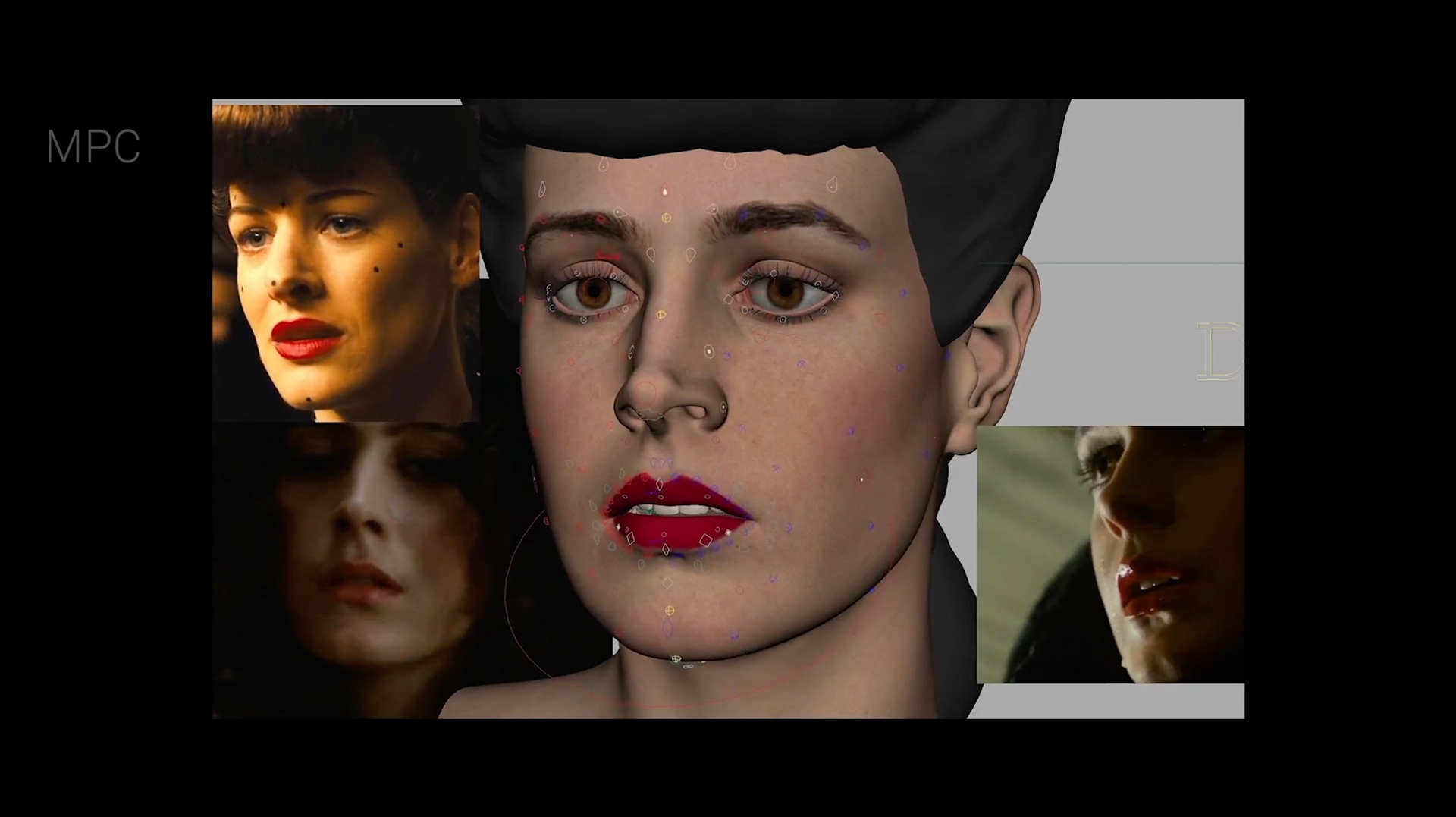
MPC’s team started off with a detailed present-day scan of Sean Young’s head, captured on the ICT Light stage. This scan was used as a reference for MPC’s artists to hand model an anatomically accurate 3D skull. The skull is something that changes very little over time, so it was a good foundation for MPC to build their 20-year-old digital Rachael from. The digital sculpt gave the team a clear idea of the proportions of her head including the bridge of nose, cheekbones and jaw line.
With the CG skull accurately recreated, it was lined it up against scenes from the original 1982 movie. The available footage of Rachael wasn’t always ideal, due to the dark and contrasty lighting with a shallow depth of field that regularly put her in soft focus so a great deal of guess work was required. MPC’s 3D modeling artists then spent many hours sculpting the rest of the head over these images until they had created an identical match.
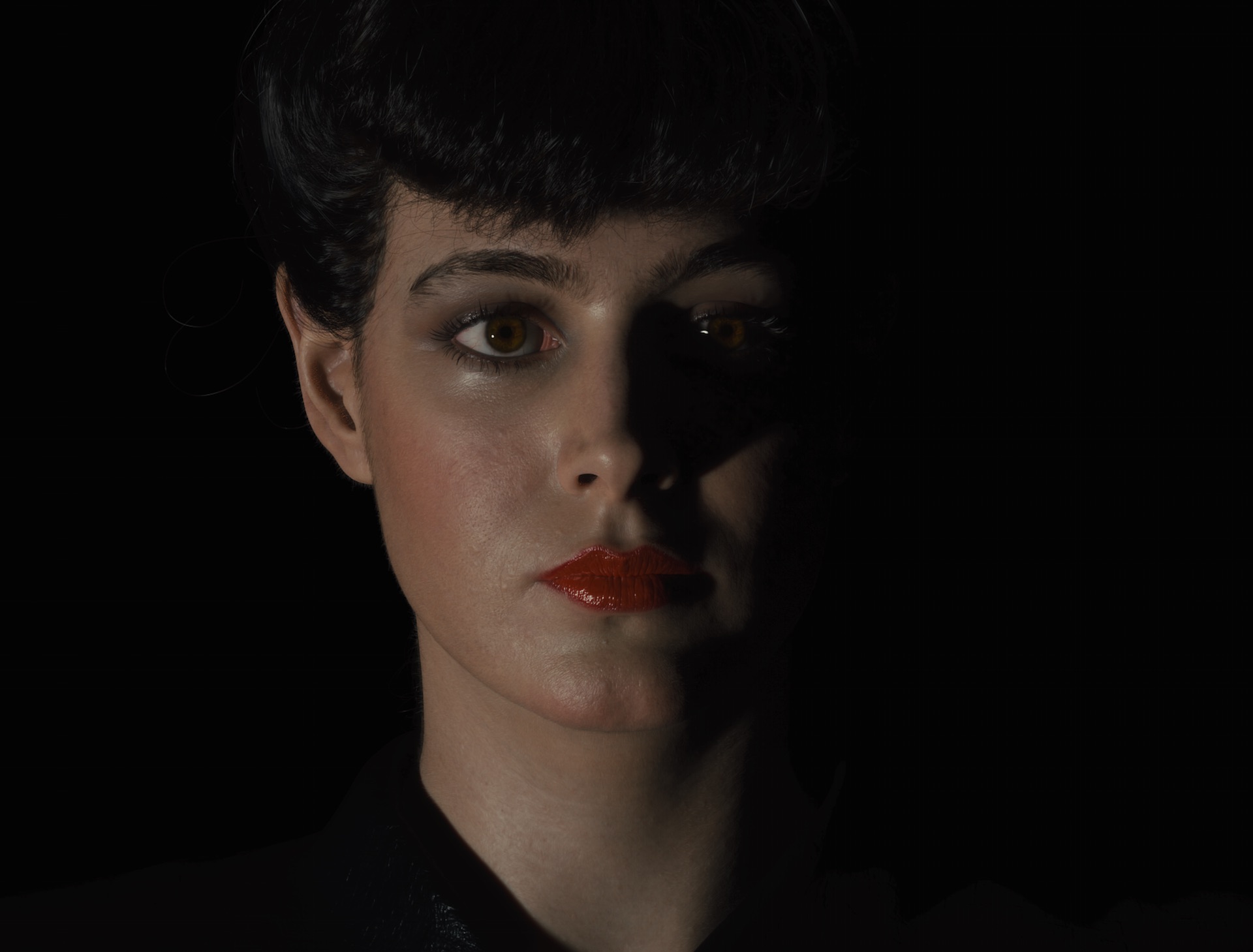
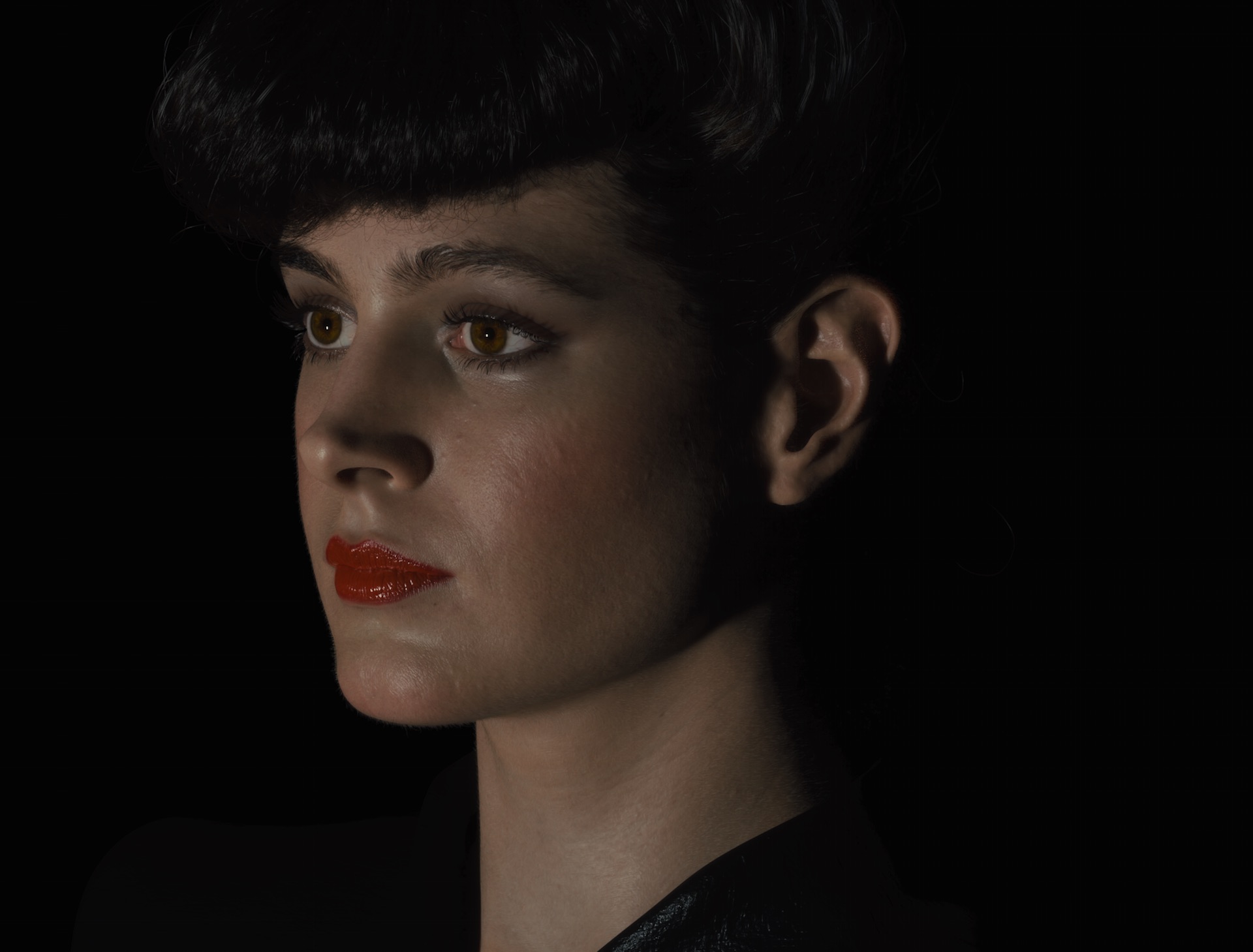
With the head sculpt completed the character’s hair and colour textures were worked on. The hair was styled using MPC’s proprietary groom software Furtility, built by MPC’s R&D team. The Furtility tool was used to match Rachael’s hair, eyebrows and eyelashes from her opening scene in Blade Runner.
To test they had accomplished a perfect likeness, MPC decided to recreate 3 shots from the original movie using their digital character. The CG head was then composited and reanimated over the top of the real footage. “We invited the filmmakers to see if they were able identify the digital double from the real actress” says VFX Supervisor Richard Clegg. “We knew we were on the right track as this proved difficult to do!”
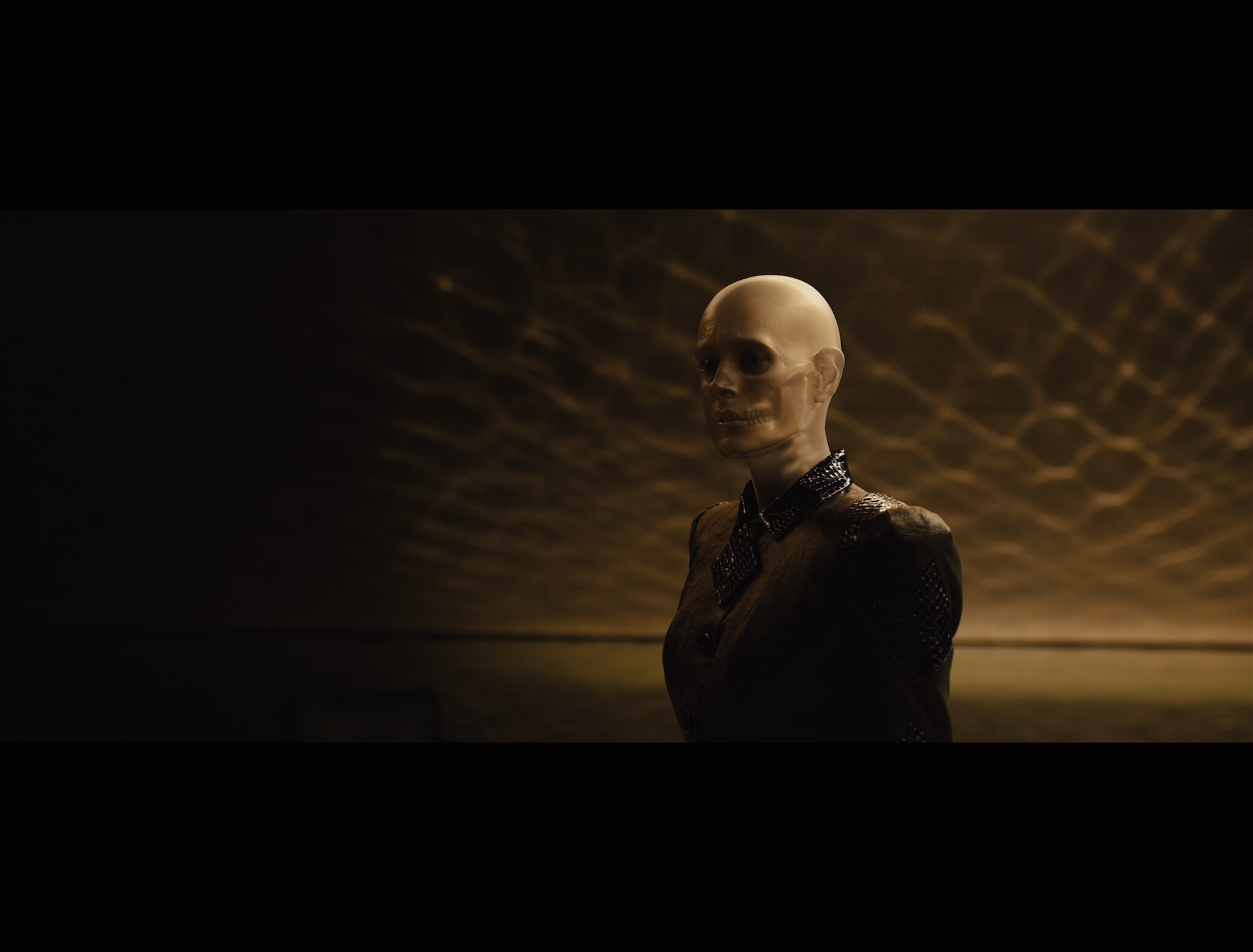
For Blade Runner 2049, a body double acted out the performance with Harrison Ford, and MPC’s job was to replace the head with their photo real CG head. Multiple witness cameras were set up to shoot each take and used to get precise Roto-Animation of the body double as well as track the animated stage lighting.
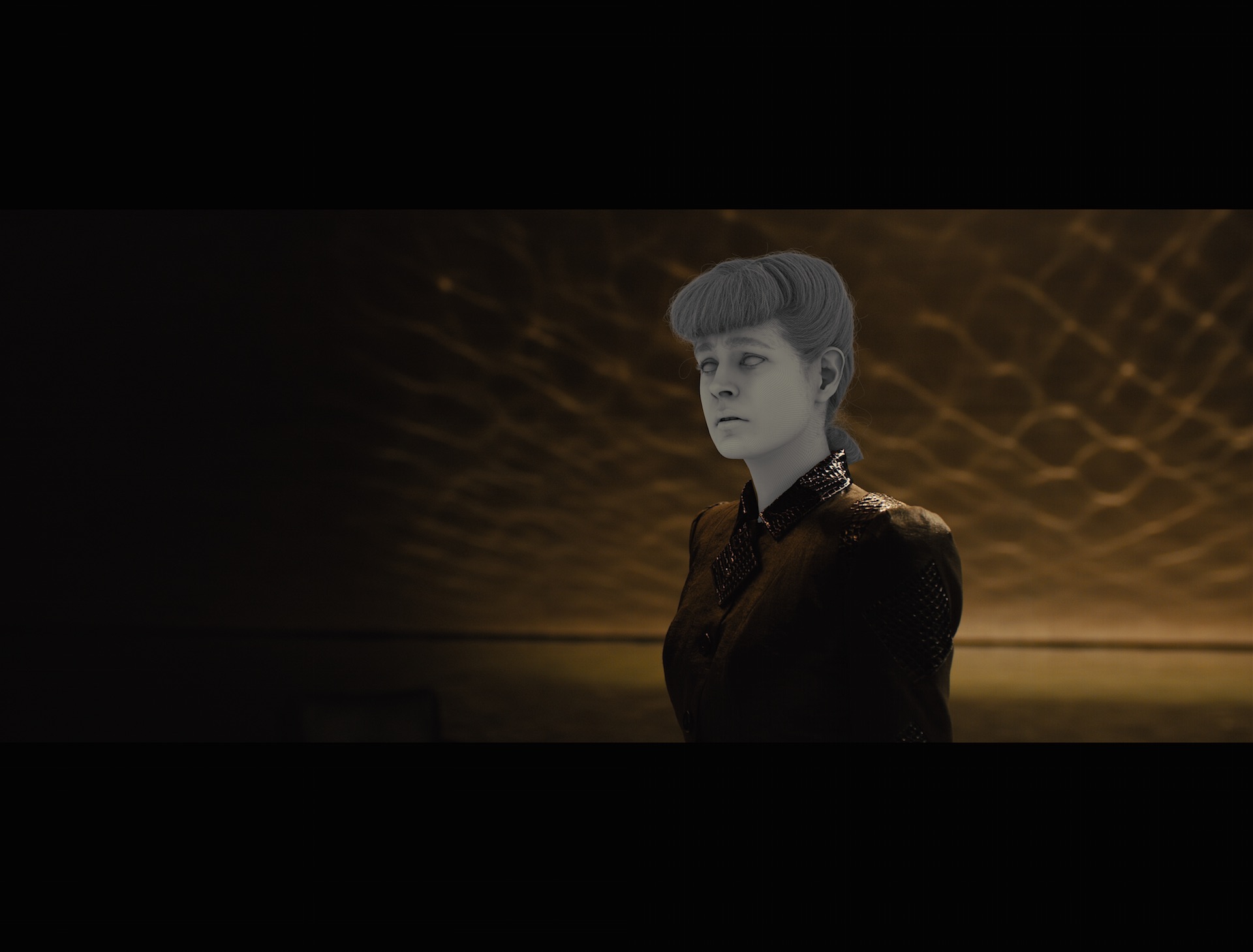
During the shoot MPC’s onset team also captured videogrammetry of the performance using Dimensional Imaging’s DI4D capture rig. They captured Sean Young and the body double, who both, directed by Denis, reenacted the performance for every shot. At the same time, they also took MPC’s FACS capture kit to capture an array of facial poses and expressions.
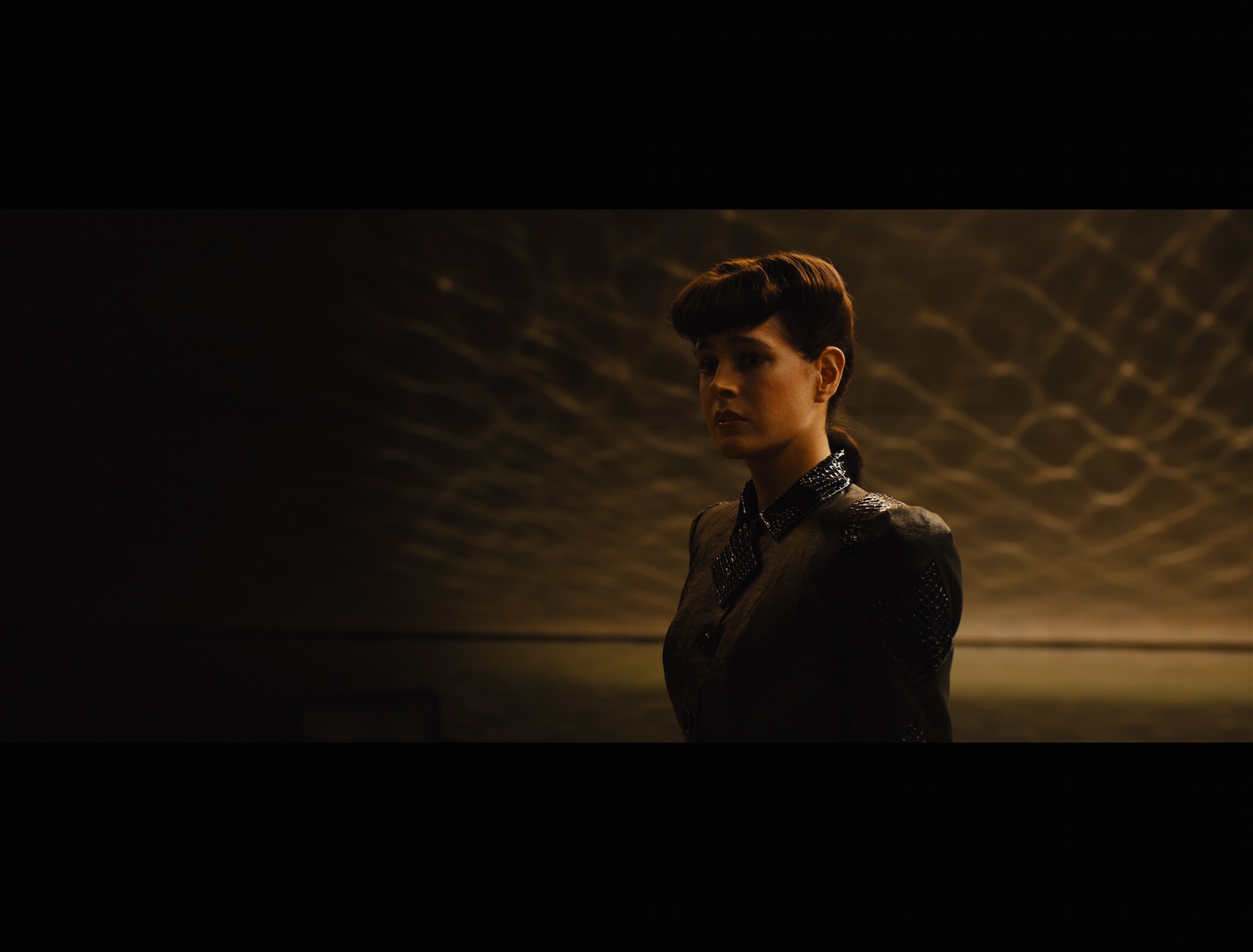
When it came to animating the shots, the videogrammetry data served as a valuable reference, however the characters entire performance was hand animated by MPC’s artists. This animation technique gave the animators more flexibility and the director more control. Hundreds of facial shapes were built all modeled against footage of Sean Young to maintain the likeness. Every detail was important to the animators, from the shapes that her mouth makes when she talks to the number of folds in her eyelids.
Blade Runner 2049 and the VFX behind Rachael - BBC Click
Blade Runner 2049 VFX Breakdown By DNEG
Evolution of VFX and the making of BladeRunner 2049
DNEG -VFX Supervisor: Paul Lambert
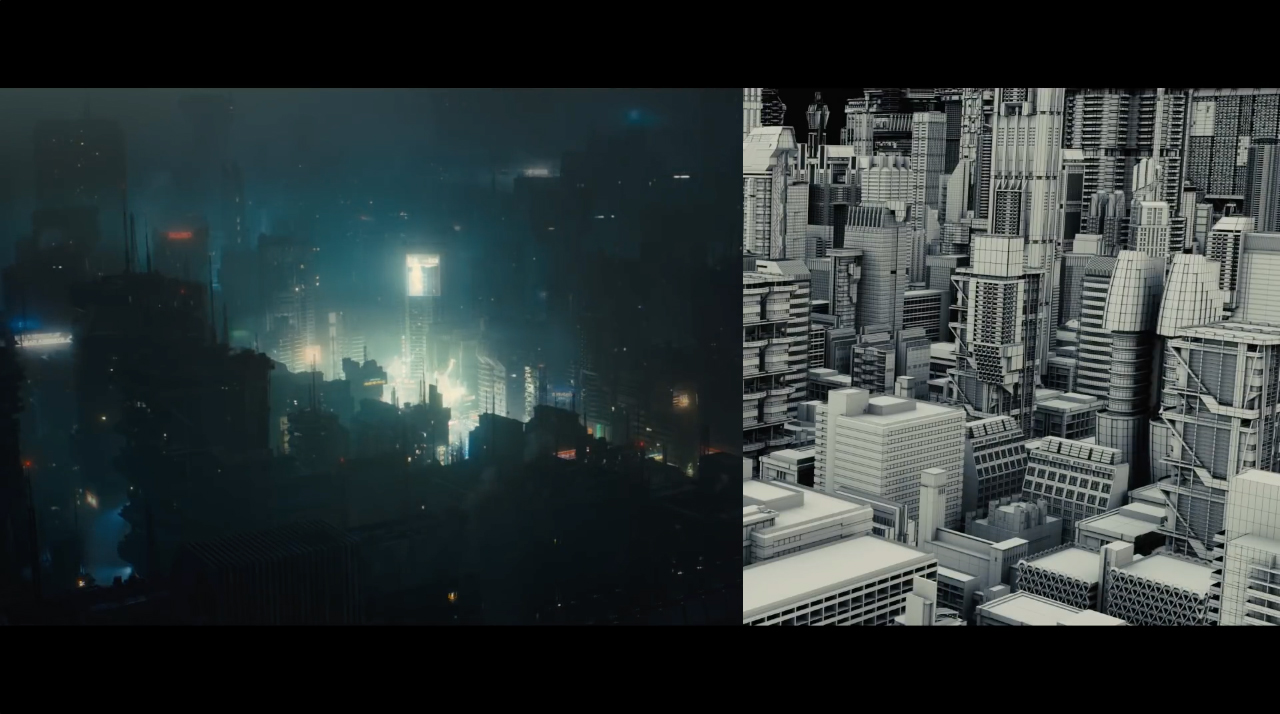
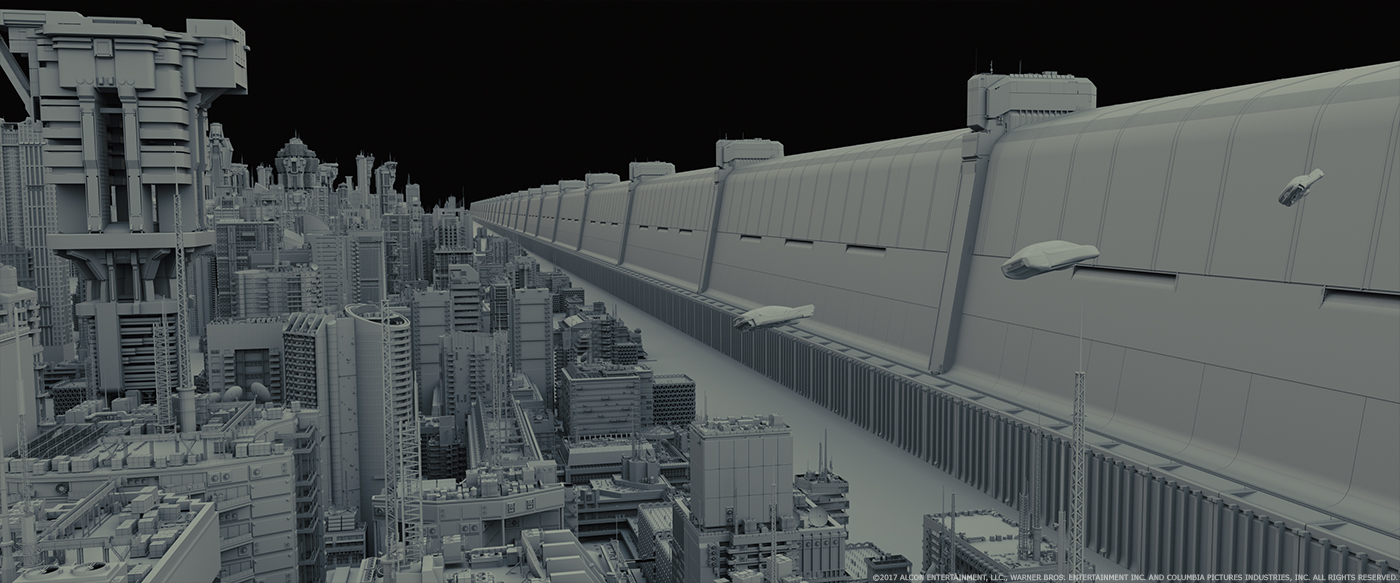
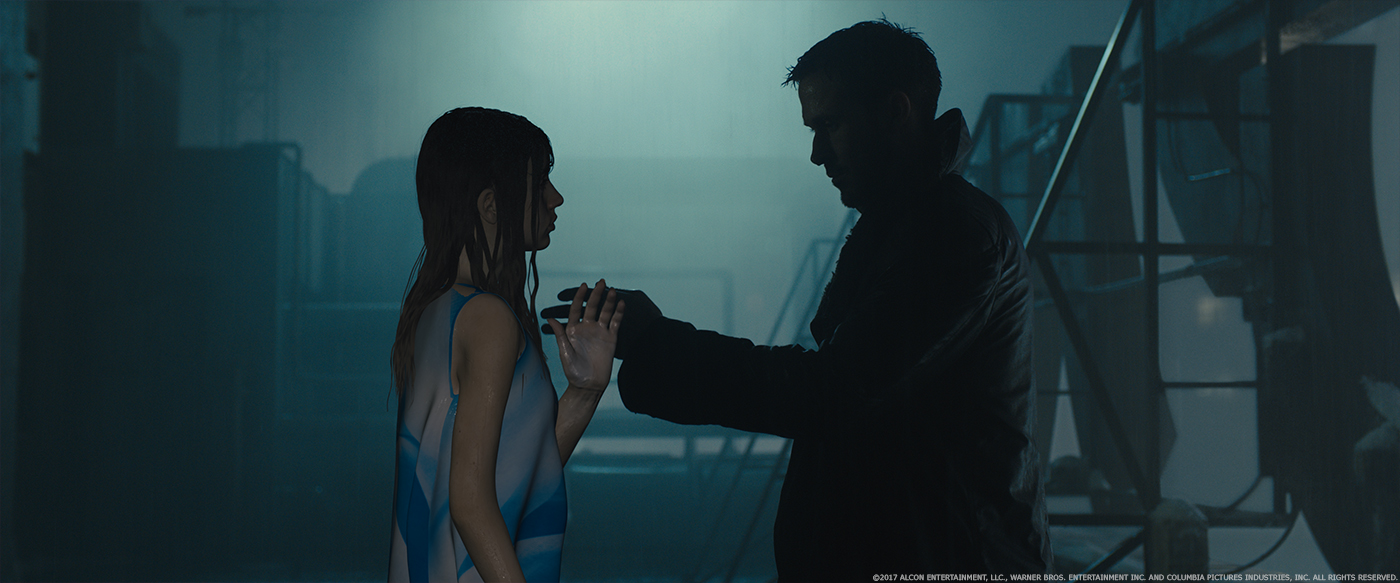
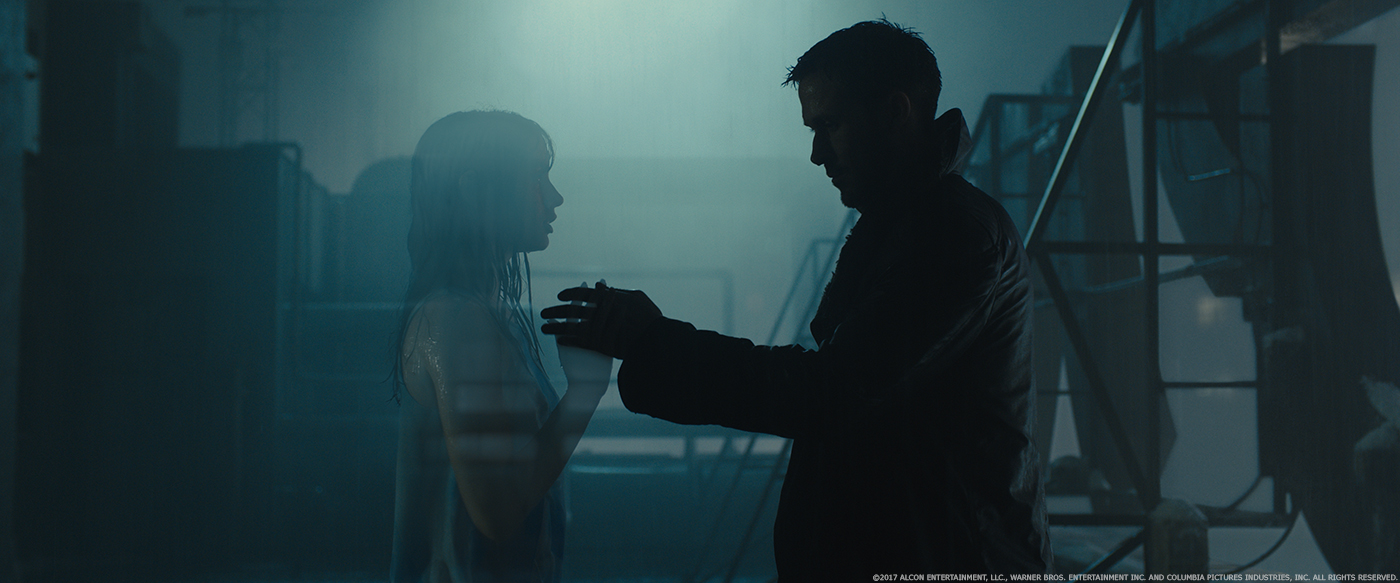
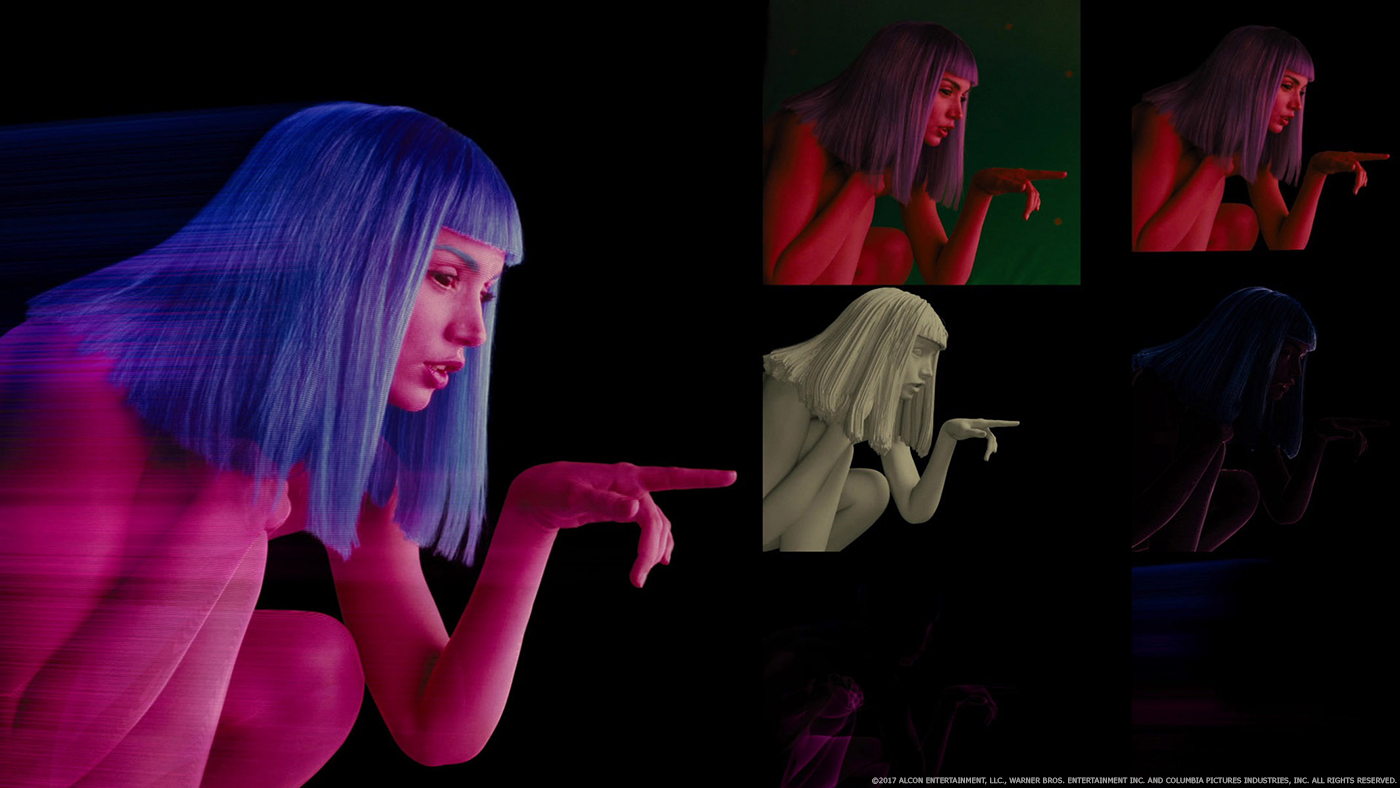
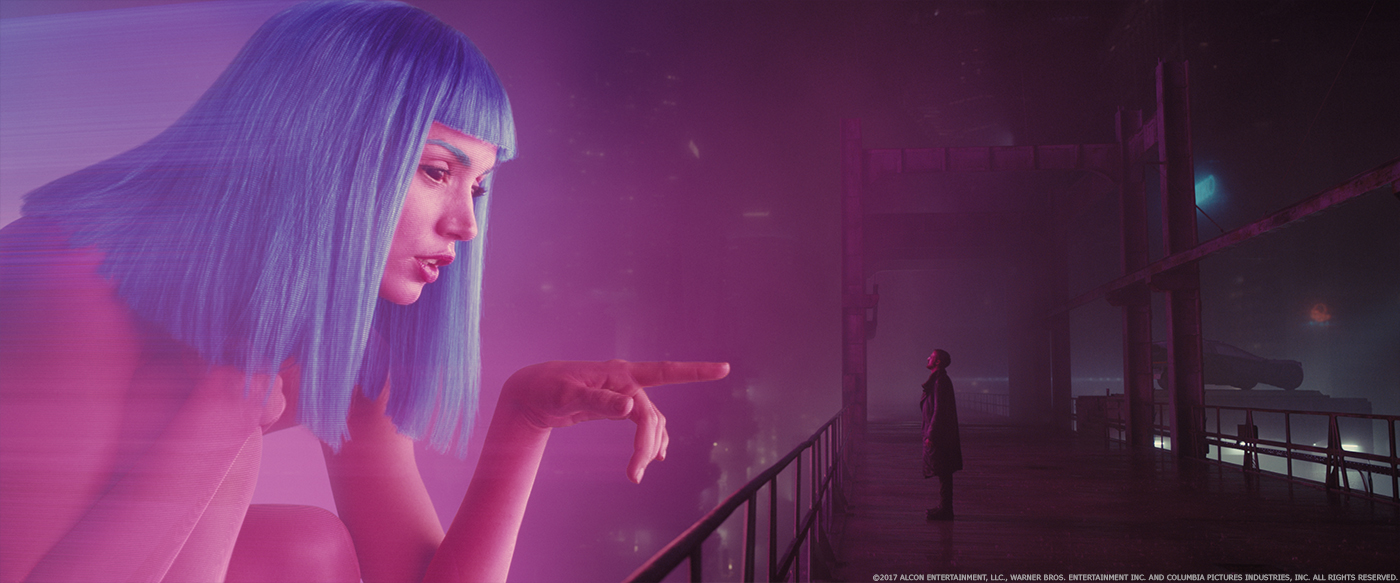
DNEG did most of the sequences LA cityscapes, the main lead on Joi the hologram and the seawall crash/fight at the end of the movie.
Blade Runner 2049 VFX Breakdown By BUF
Blade Runner 20149 - Making of by BUF
Director: Denis Villeneuve
Production: Alcon Entertainment
VFX supervisor: John Nelson - VFX Producer : Karen Murphy
BUF VFX supervisors: Pierre Buffin / Olivier Cauwet / Jeremy Robert
BUF VFX producers: Nicolas Bonnell / Christina Wise / Julien Cimino
BUF worked on 5 sequences shared between our facilities in Paris and Montreal.
Jeremy Robert was in charge of the sequences in Montreal.
In Paris, we were involved on 3 sequences:
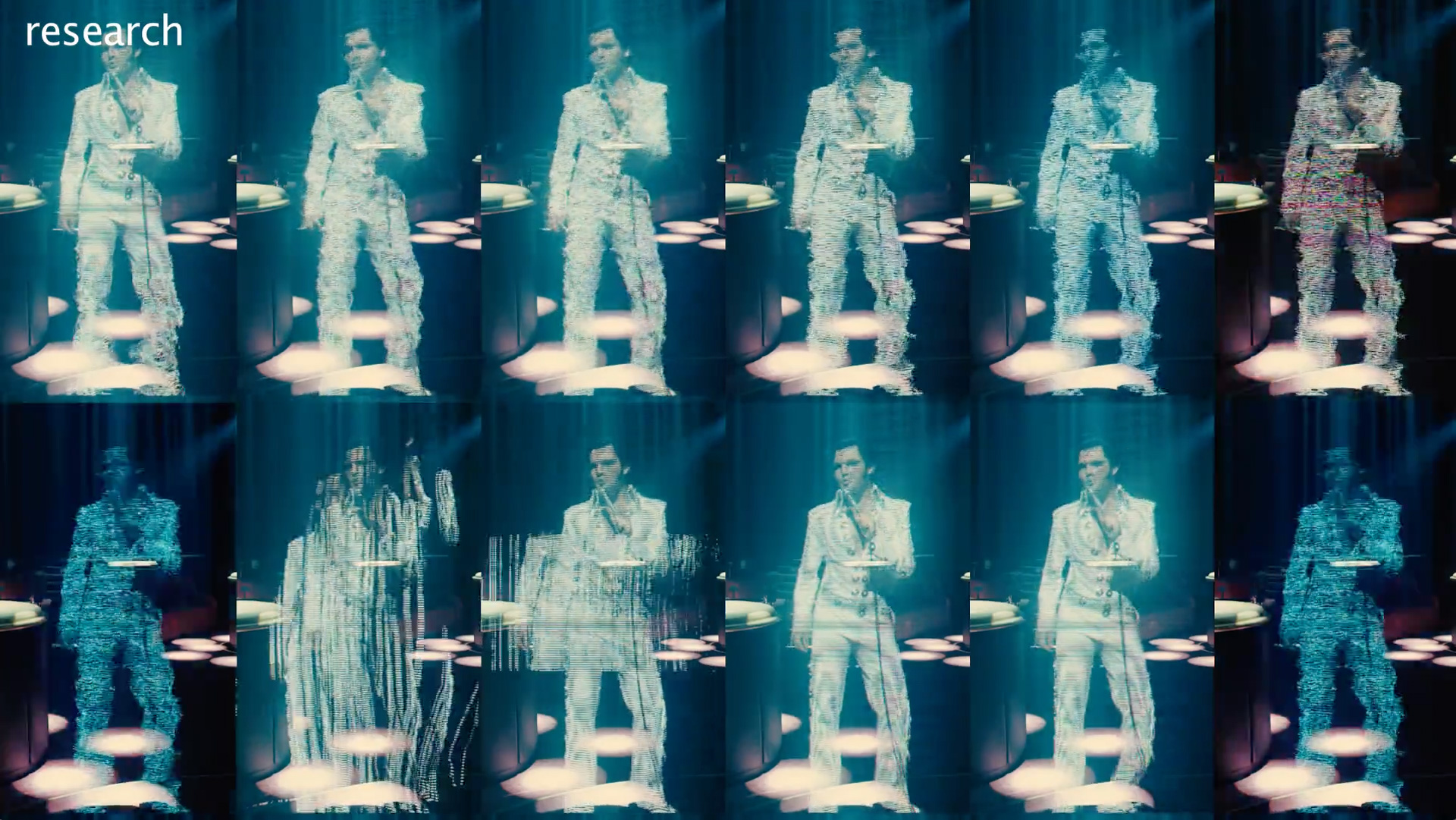
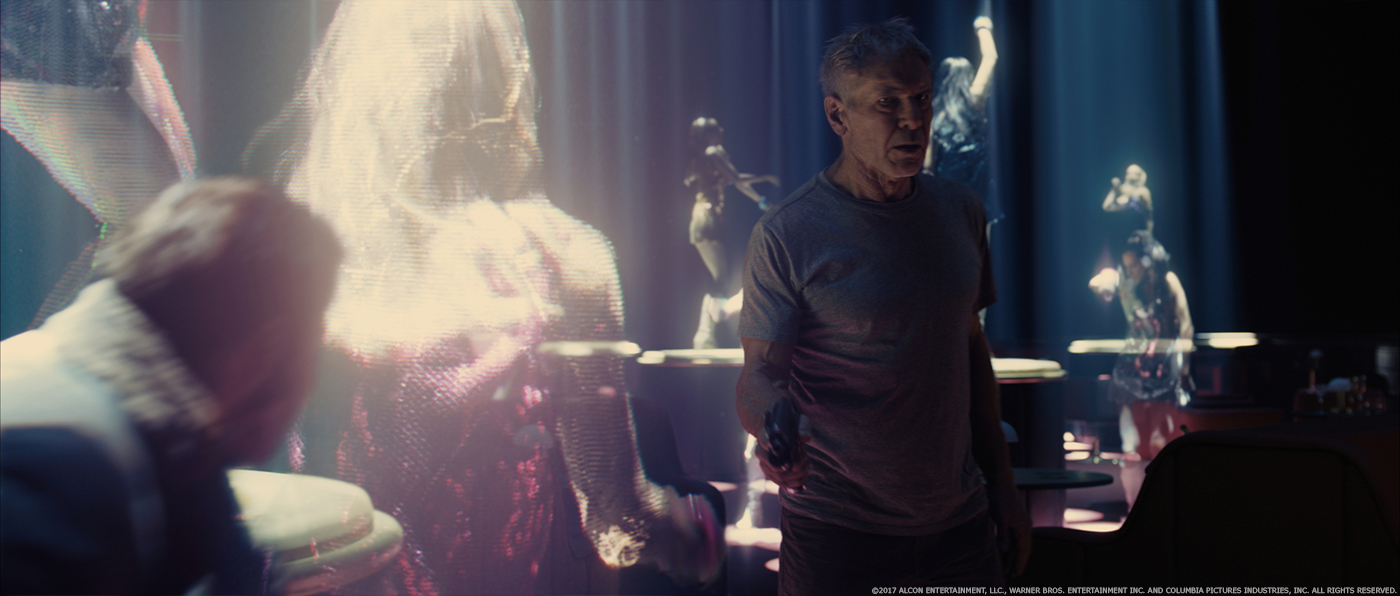
HoloFunHouse: we re-created the holograms of various well-known shows. They all start to get mixed up while Deckard and K. fight, and you can see the holograms of 80 dancers (with Folies Bergeres, gogo dancers or even cow girls), but also Elvis Presley and Marilyn Monroe.

Drink with Frank: we created Frank Sinatra’s hologram, which appears in the jukebox singing “One for my Baby”.
Last Stand Off: this is the ending sequence. We crafted the whole snowy environment that surrounds Deckard and K. You can see Los Angeles, Ana’s lab and the horizon of a frozen ocean.
In Montreal, we worked on two sequences:
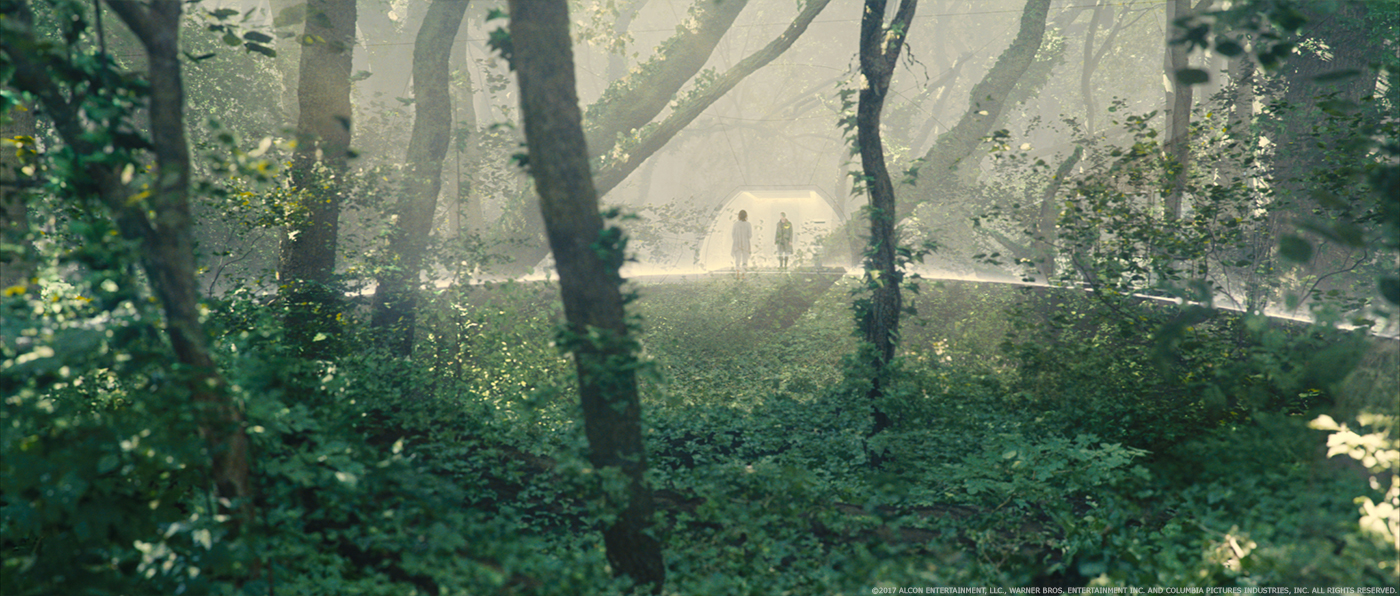
Ana’s memories lab: we created the shape-shifting insect, the forest hologram and the birthday memories. We were also asked to tweak the set, the lab’s scanner and the snow’s hologram around Ana.
Last Stand Off: we produced the lab extension and the police spinner.
Blade Runner: 2049 VFX Breakdown By Rodeo FX
Rodeo FX artists completed 75 visual effects shots on the sequel to Ridley Scott’s classic. The work was completed at the company’s Montreal and Los Angeles studios. Deak Ferrand, Art Director and Concept Artist, worked directly on the conceptualization with director Denis Villeneuve out of Rodeo FX Los Angeles.
“The first Blade Runner, released in 1982, is a classic Sci-Fi film and I’m proud to have been involved myself as a VFX supervisor for Rodeo FX on this sequel, which will undoubtedly also leave its mark. It is a privilege to once again work on a Denis Villeneuve movie and showcase Quebec’s talent on this major project,” said Sébastien Moreau
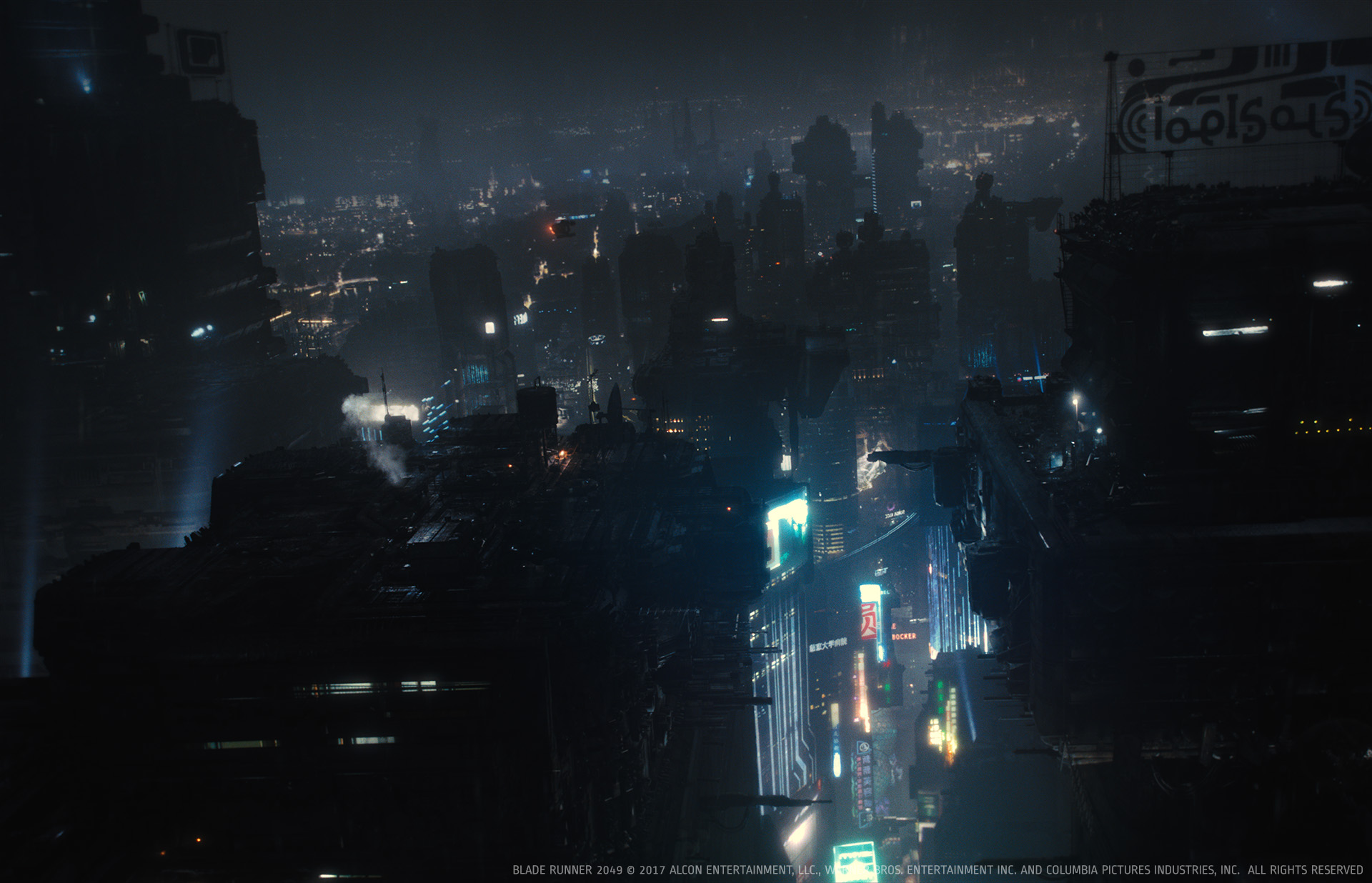
This is not a first collaboration for Rodeo FX and Denis Villeneuve. The relationship began with the Quebec film Incendies, which was nominated for Best Foreign Language Film at the Oscars in 2011. Since then, the Quebec visual effects studio has closely followed Denis Villeneuve’s career and had the opportunity to work on three different films that he directed, namely Enemy (2013), Arrival (2016) and now Blade Runner 2049 (2017).
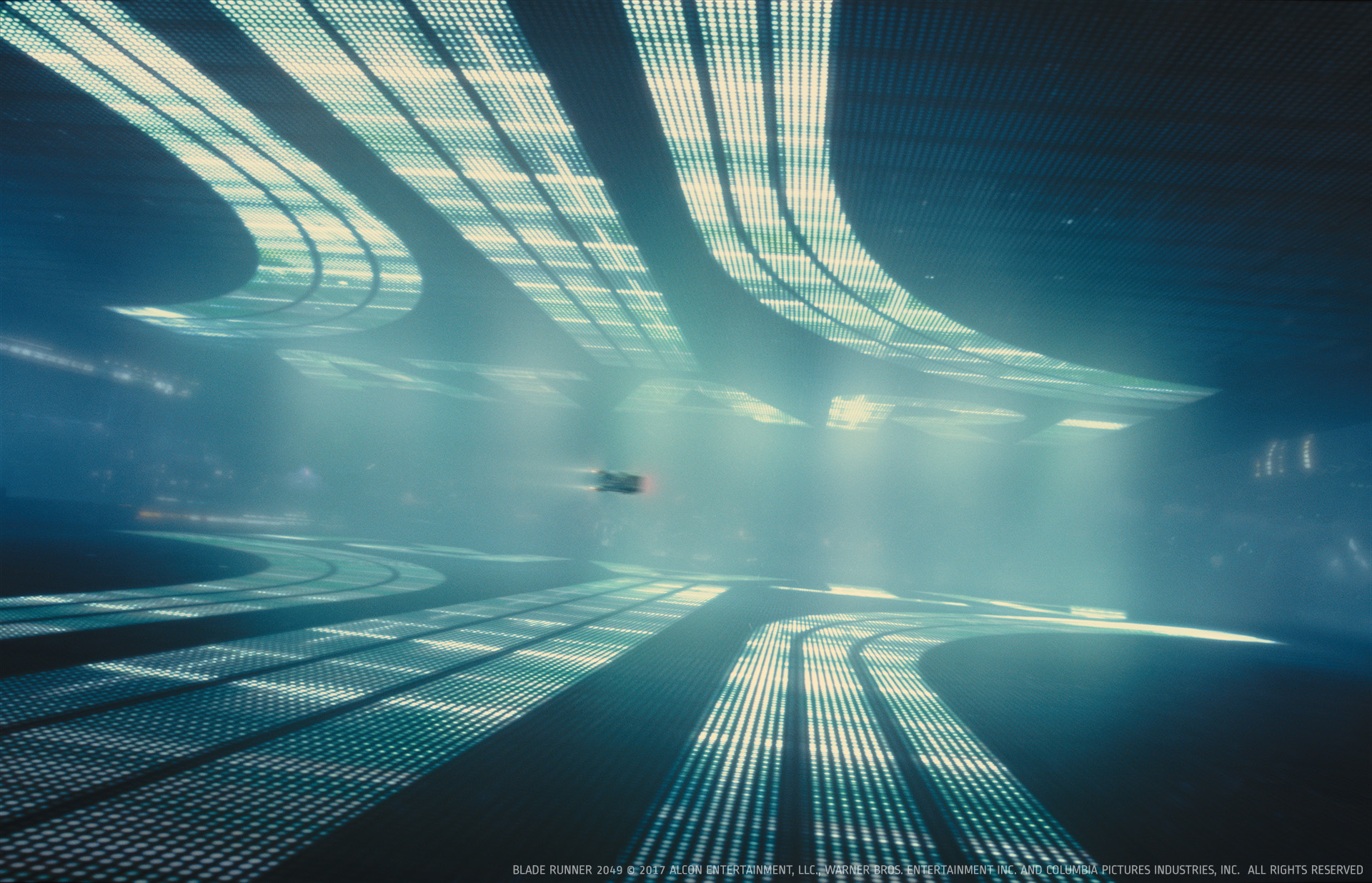
BLADE RUNNER 2049 VFX BREAKDOWN By Universal Production Partners
UPP -VFX Supervisor: Viktor Muller
UPP’s digital effects work included scenes involving the gallery of replicants (pictured above) and the climactic underwater fight, among many others.
BladeRunner2049 UI Reel ByTerritory Studio
Weta Workshop - Blade Runner 2049 Miniatures
Director Denis Villeneuve’s Blade Runner 2049, the follow-up to Ridley Scott’s iconic science fiction film, has earned universal critical acclaim worldwide. Alongside stunning visuals and cutting-edge digital effects, the film features monumental physical miniatures, built and filmed in New Zealand by Academy Award-winning Weta Workshop.
The miniatures build-and-shoot took place in Wellington in tandem with the film’s production in Hungary. Reuniting crew who had worked together on miniatures for The Lord of the Rings, Weta Workshop was tasked with creating, and subsequently filming, three expansive miniature environments: a Los Angeles cityscape, complete with enormous L.A.P.D tower; parts of the Trash Mesa, a vast ruin on the outskirts of L.A; and a set of colossal pyramid-shaped skyscrapers. Weta Workshop’s Design Studio was commissioned at an early stage to help conceptualise key scenes for the film.
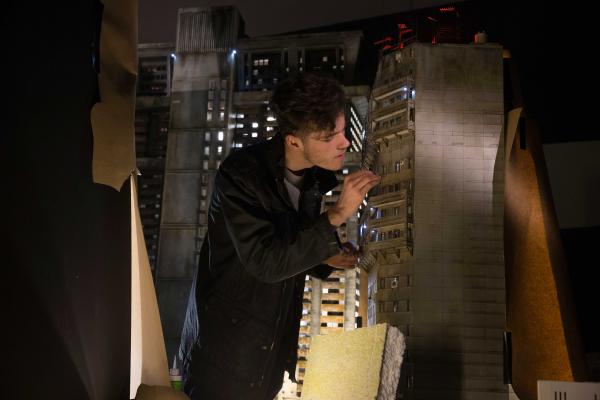
In Villeneuve’s Blade Runner future, the Los Angeles of 2049 is populated with megalithic buildings on a scale unconceivable in today’s world. Under the leadership of Weta Workshop senior art director Ben Milsom and production manager Holly Beals, the Workshop crew combined precise 3D modelling and laser-cutting techniques with traditional model-making craftsmanship, to build a series of towering structures; some so large that, even shrunk to as little as 600th scale, they dwarfed the artists and technicians who worked on them.
Lower Hutt’s Avalon Studios, with its purpose-built shooting stages, was the ideal setting to house and film these enormous creations.
“We knew we needed a big space and Avalon was so well-resourced – there was a range of support that they gave us, which was wonderful. They had a lot of equipment on hand and multiple stages.”
-Holly Beals, Production Manager, Weta Workshop.
Of the 38-odd structures created, the L.A.P.D building was the biggest, standing at 4.5 metres tall. Built in the Workshop’s Miramar Peninsula facility, it had to be transported to set in three pieces. The pyramid-shaped Wallace Towers, constructed around steel frames, could only be lifted by crane; while the Trash Mesa, built in 87th scale, nearly filled the floor of its Avalon stage. The individual elements for the Mesa were crafted at Weta Workshop then assembled on site like a model kit of enormous proportions. It called to mind the Workshop’s best-known miniatures work: the towering, intricately detailed environments of The Lord of the Rings.
“They’re really bigatures – they’re not miniatures. They’re massive buildings. They’re just stellar pieces of art.”
-Pamela Harvey-White, Production Manager (On-Set), Weta Workshop.
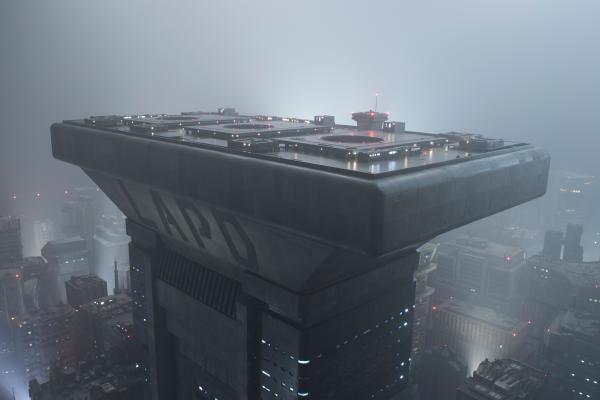
Shooting of the miniatures began in October 2016. Directing the Weta Workshop film unit was the multi award-winning special effects photographer Alex Funke, an industry veteran internationally renowned for his work on films like Total Recall, King Kong and The Lord of the Rings. Alex and his team – many of whom were part of the original crew who worked with Alex several decades ago on Rings – shot multiple passes of each miniature with various lighting and practical effects. Those shots were then delivered to Blade Runner 2049’s VFX supervisor John Nelson and VFX producer Karen Murphy, who were on location in Budapest. The shots provided the basis for the film’s visual effects team to layer digital elements, such as the iconic Spinner, seamlessly over the top. The effect, as the vehicle soars through the city among real, physical buildings, is breath-taking. Explains Alex:
“The easiest way is to break down the shot into a series of elements…then when it’s time to build the shot, you have complete control. Effectively you’re building a huge and very complicated sandwich that actually becomes the finished shot.”
-Alex Funke, Miniatures Director of Photography, Weta Workshop.
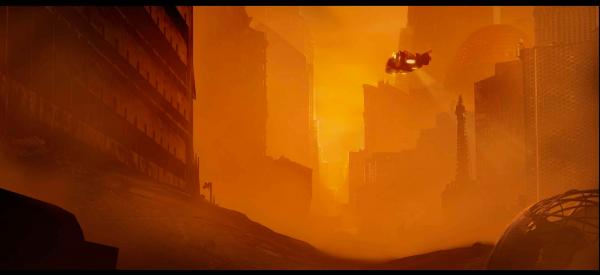
Hailed as “a worthy heir to one of the greatest science-fiction films of all time” (The Atlantic), Blade Runner 2049is in cinemas now.
Alcon Media Group presents, in association with Columbia Pictures, a Ridley Scott/Alcon Entertainment/Bud Yorkin production, in association with Torridon Films and 16:14 Entertainment, a Denis Villeneuve film. Written by Hampton Fancher and Michael Green, story by Fancher, based on characters from the novel Do Androids Dream of Electric Sheep? by Philip K. Dick, Blade Runner 2049 stars Ryan Gosling and Harrison Ford, is distributed by Sony Pictures Releasing, and opened in New Zealand on October 6.
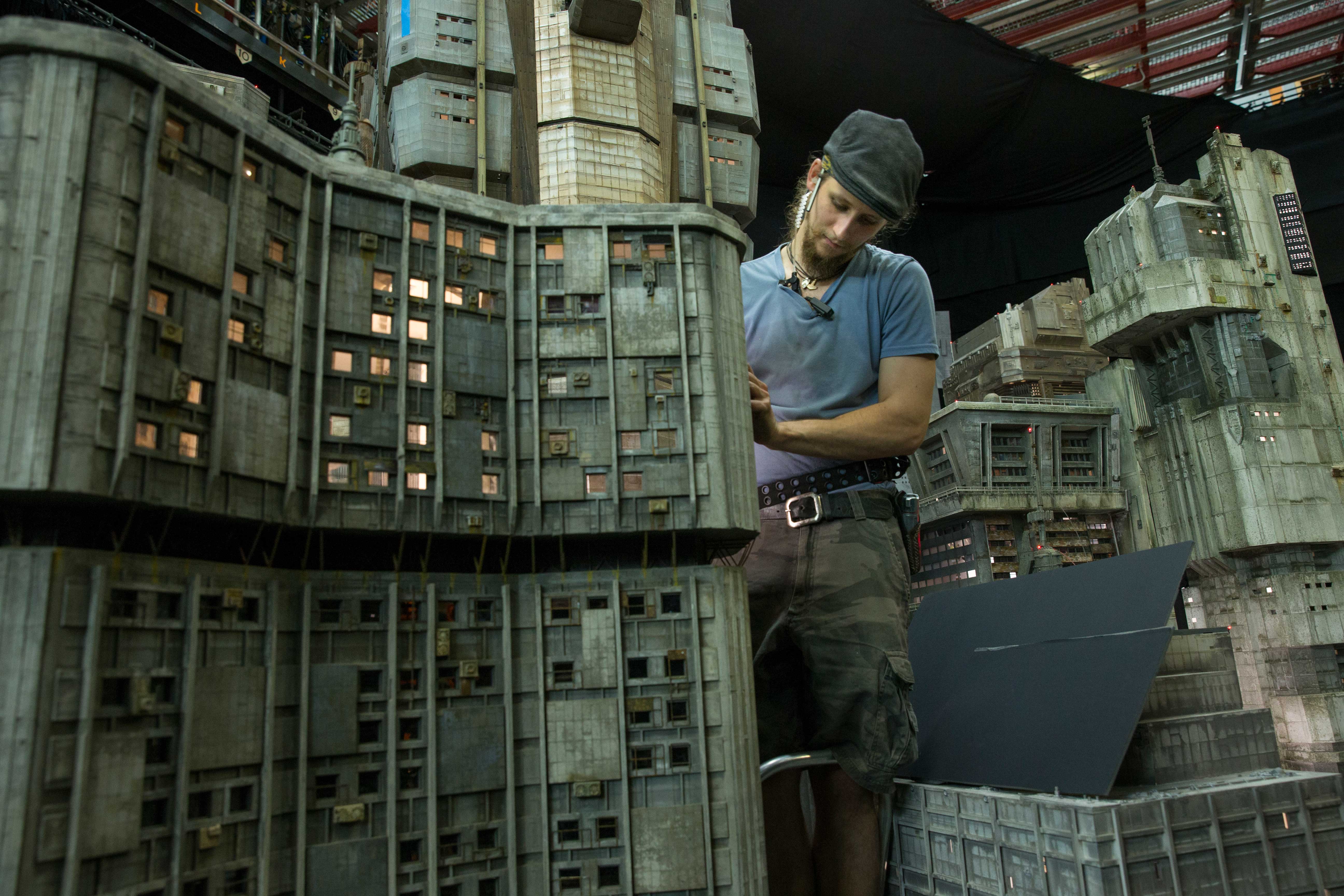
Technician Chris Menges works on one of the megalithic buildings that dominate the cityscape of Blade Runner 2049.
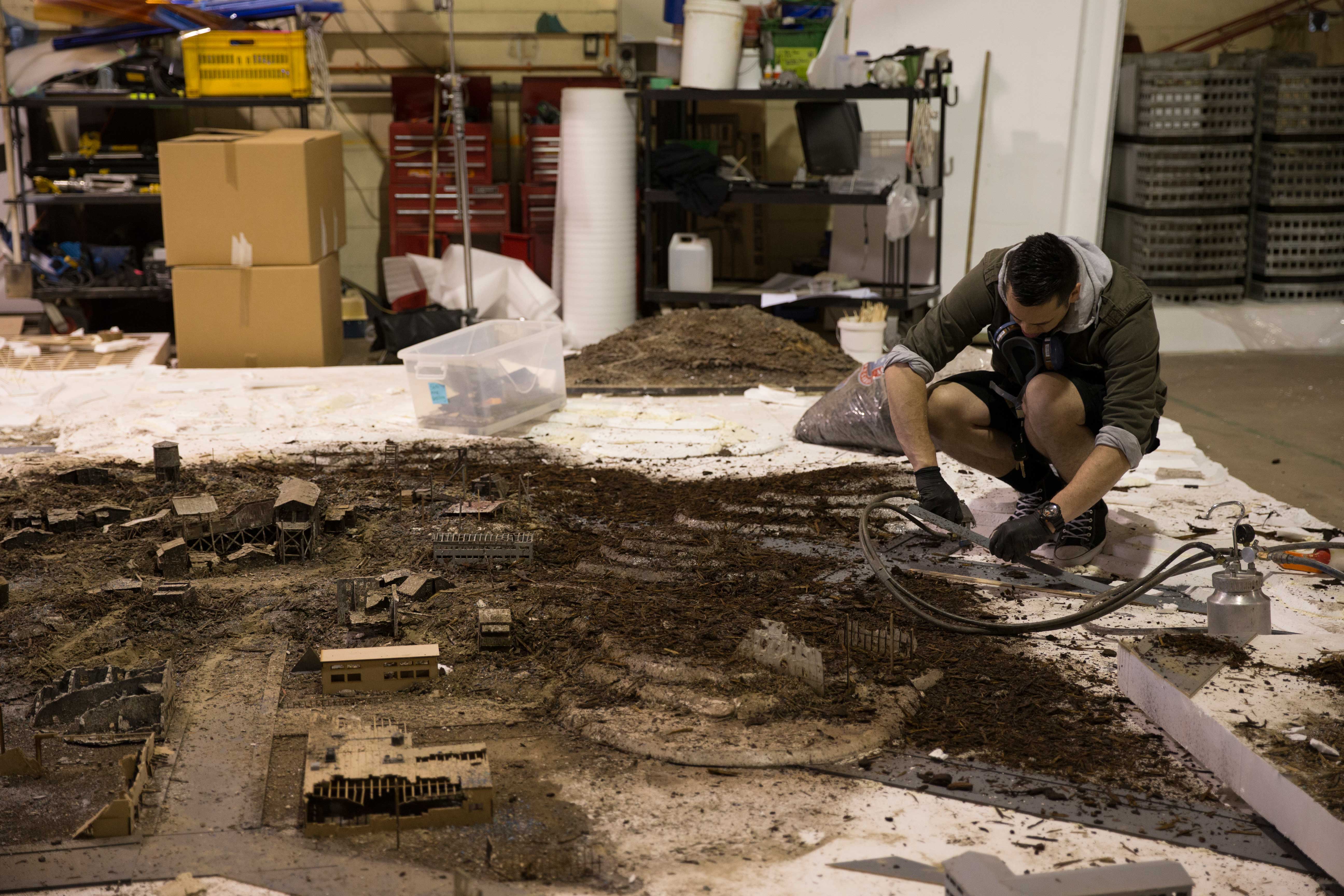
Mark Dewes adds detail to Weta Workshop’s section of the Trash Mesa miniature.
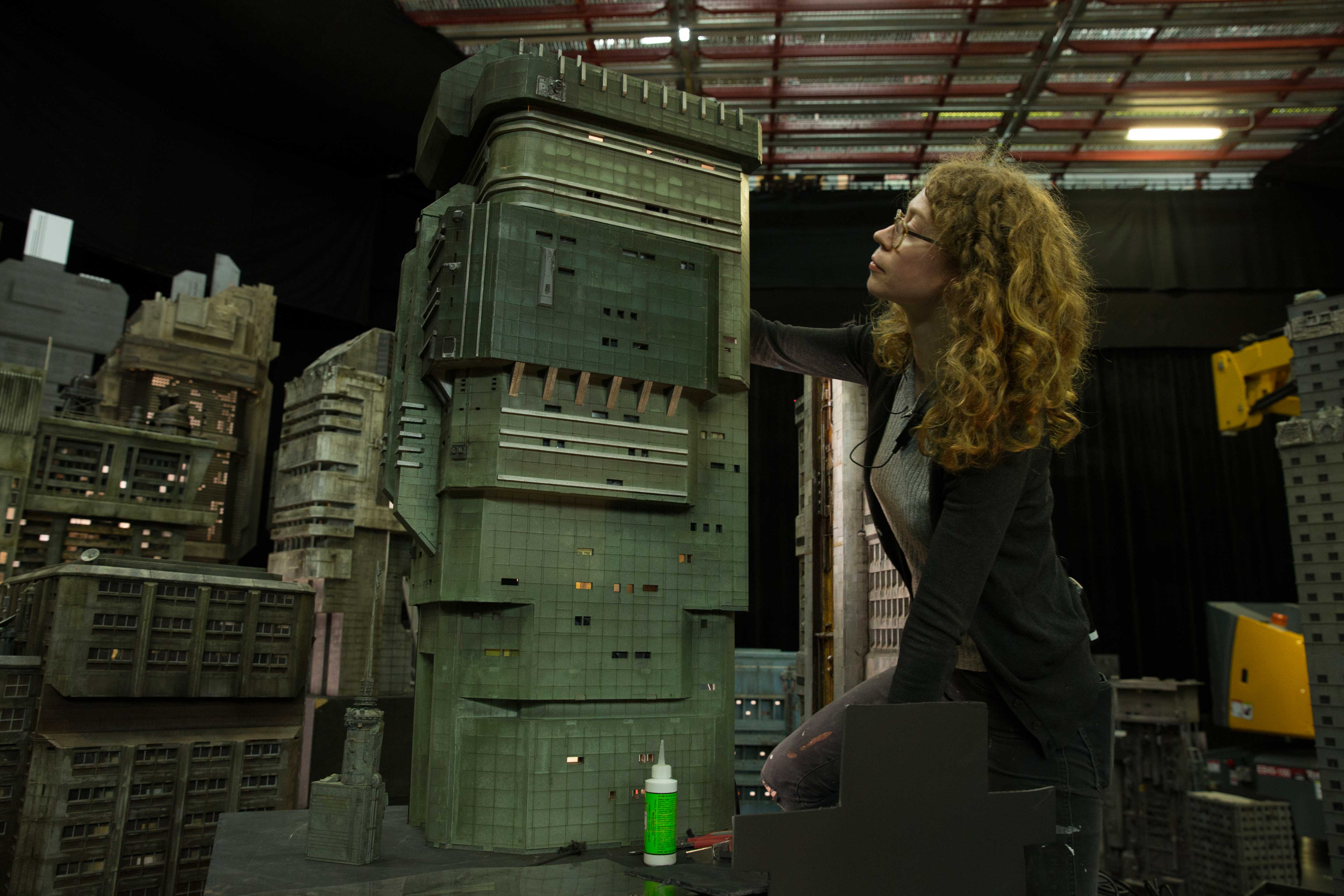
Lauren May kneels beside one of the enormous buildings built by Weta Workshop for the film.